
What are the Almshouses?
/ HISTORY
The Past
In the centuries before the introduction of the welfare state, almshouses provided an important lifeline to many communities, offering not only accommodation, but sometimes also hospital care, medical help and emergency provisions to people in difficulty. Nowadays, almshouses continue to provide affordable housing and sometimes extra care and other services for people unable to satisfy their own accommodation needs.
King Athelstan built the first almshouse in York in about 900AD, and the earliest one still in operation is the Hospital of St Cross in Winchester, which dates from 1132.
Most of the over 2,000 British almshouses still in existence are run by charities and together provide accommodation for more than 36,000 people. Most almshouses were founded to help those in the community who, through no fault of their own, had fallen on hard times and were usually characterised by an ethos that promoted an independent life, whilst living as part of a supportive community.
In the early years, almshouse accommodation was very simple and often amounted to a single-room cell with shared washing and cooking facilities. Residents were often required to wear a uniform and attendance at chapel or church was usually mandatory as many of the trusts responsible for the building of almshouses had a Christian ethos.
To view a copy of the Archaeological Assessment of Bubwith Almshouse Chapel by Jerry Sampson click here
Read the Holy Well Glass Report here
Today
The City of Wells Almshouses in Somerset are not a single building but a collection of five historic almshouse foundations, now managed together under one charitable trust. Each was founded by a different benefactor across several centuries, giving each its own distinct history and character.
The City of Wells Almshouses represent one of the most enduring examples of charitable housing in England, with roots stretching back nearly six centuries to the medieval foundation of Bubwith's in 1424. Nestled within the historic fabric of Wells — England's smallest city — these five foundations sit close to the great Cathedral and the surrounding ecclesiastical buildings, reflecting the deep ties between the Church and civic charity that shaped the city over the centuries. These weren't just buildings; they were complex social spaces where charity, piety, commerce, and human resilience intersected.
Each foundation was born of a different age, from the late-medieval piety of Bishop Nicholas Bubwith, through the era of James 1 with Bishop John Still, the seventeenth-century benefaction of Henry Brick and the Georgian foundation of Dr. Edward Willes. Together they tell a continuous story of philanthropy adapting to the needs of each generation.

The Trust embodies a strong sense of local stewardship and responsibility. By requiring a local connection and integrating so closely with the life of the cathedral city, it positions itself not as a detached housing provider but as an integral part of the Wells community.
Its ethos of charity, neighbourliness, and continuity ensures that the generosity of benefactors from the fifteenth century onward continues to bear fruit today — a remarkable example of how historic philanthropy can remain vital and meaningful in the modern age.

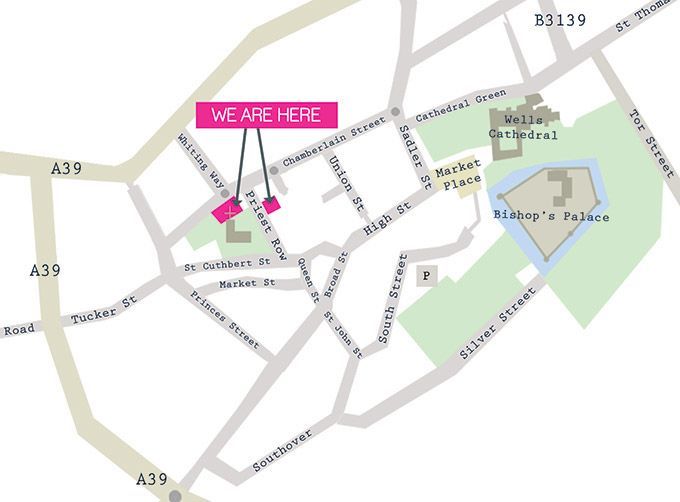
The Location
The Architecture
Architecturally, the almshouses are admired for their character and heritage. Bubwith's, with its chapel and hall, remains a focal point of the group and a reminder of the spiritual origins of almshouse charity. Over the centuries the buildings have been maintained, adapted and modernised, but they retain their historic charm while providing safe, comfortable accommodation.
All are listed structures, and their preservation is itself part of the Trust's wider contribution to the cultural life and streetscape of Wells.


The Archives
The City of Wells Almshouses currently hold some records, mostly twentieth century, of their own. A catalogued list is available for those interested.
Other records are held at:
The Wells City Archives, housed at the Wells & Mendip Museum, holds a number of records available for public viewing.
The Wells Cathedral Archives holds records of the Wells Old Almshouses including title deeds for the buildings dating back to the thirteenth century
About
Because they are clustered in a small, historic cathedral city, their shared personality is one of integration—they are not tucked away on the outskirts, but are woven into the fabric of the city itself, maintaining the tradition of being "in the heart" of the community they serve.
While they have different "birthdays" and founders, their modern personality is defined by the City of Wells Almshouses Trust. Today, they function as a cohesive community rather than isolated relics. The Trust manages them collectively, ensuring that while the walls hold different historical stories, they all serve the same modern function of providing secure, affordable, and supportive housing for the elderly in Wells .